INTERPRETIVE SIGNAGE
CITY OF NORWALK, CT
HISTORIC CEMETERIES
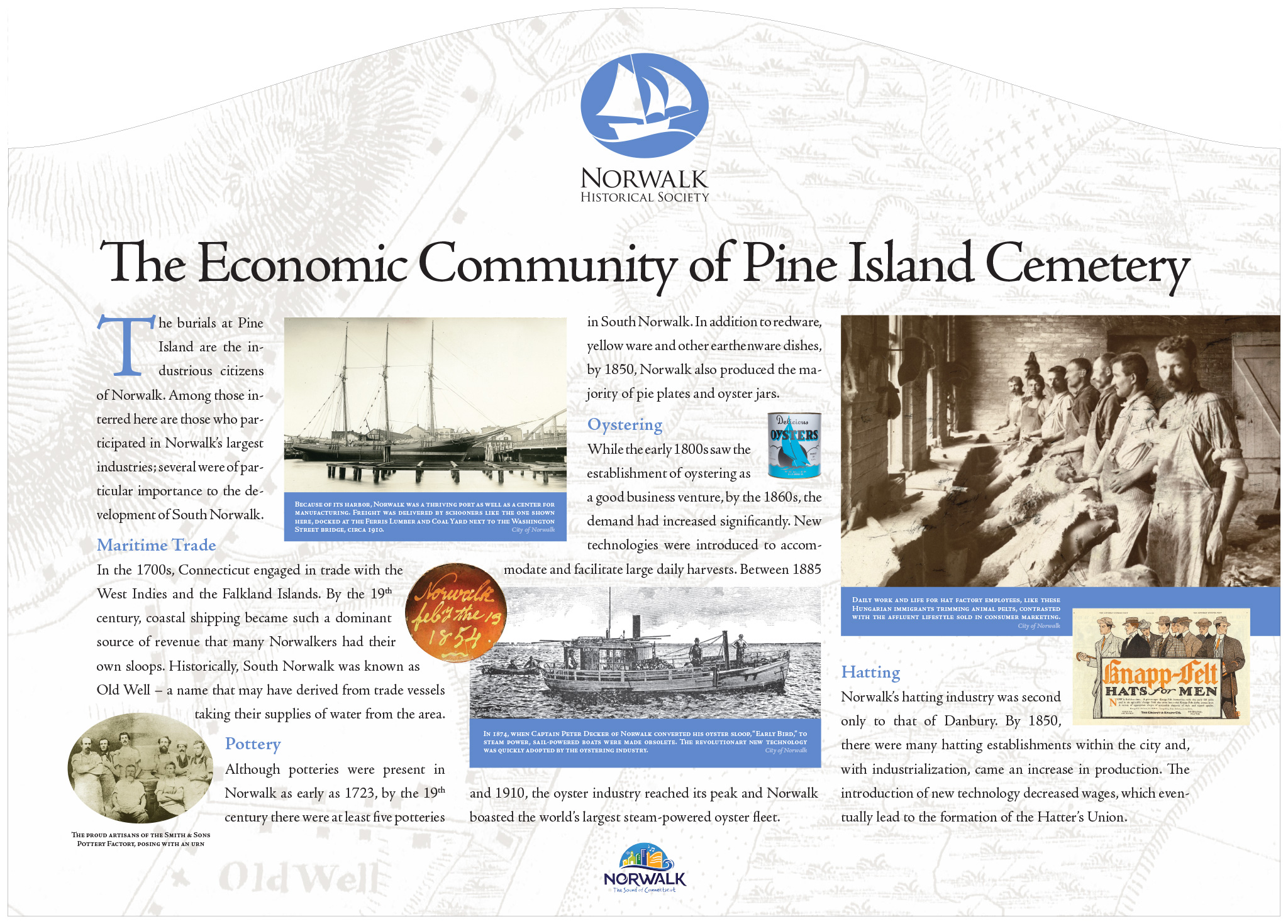
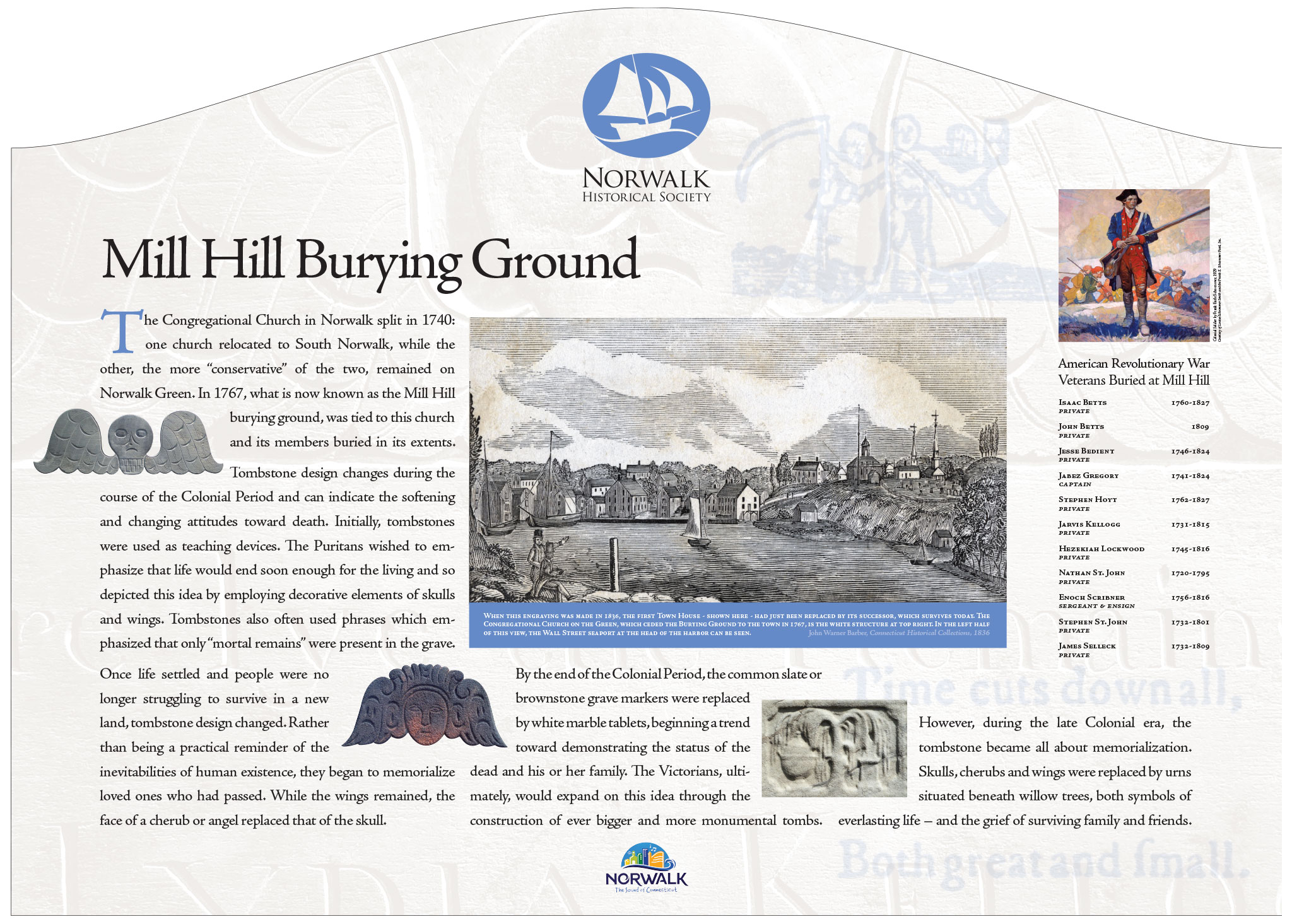
The city of Norwalk, Connecticut, is home to four significant historic cemeteries that offer deep insight into the town’s cultural, social, and historical evolution. These burial grounds include the 1708 Pine Island Cemetery, the 1723 Brookside Cemetery, the 1767 Mill Hill Burying Ground, and the c. 1813 Kellogg-Comstock Cemetery. Each site provides a unique lens through which to examine early American life, community values, and the shifting perspectives on mortality and remembrance across generations.
To enhance public engagement and education at these important heritage sites, Oxygen Design partnered with Daryn Reyman-Lock, PhD of Sawdust and Strata Consulting to develop a cohesive suite of interpretive signage. These outdoor exhibit panels were carefully crafted to contextualize the cemeteries within the broader narrative of Norwalk’s colonial and post-colonial development, while making the content accessible and engaging to modern-day visitors.
The signage explores how cultural attitudes toward death, race, and class shaped burial practices and gravestone symbolism throughout Norwalk’s history. By highlighting these themes, the interpretive panels invite reflection on how different communities—particularly underrepresented groups—have been remembered (or overlooked) in public memory. Each panel incorporates historical records, gravestone imagery, and inclusive storytelling to foster a deeper understanding of Norwalk’s diverse past.
This project underscores the role of interpretive design in historic preservation, turning otherwise quiet or overlooked spaces into places of education, commemoration, and civic pride. For genealogists, history enthusiasts, and everyday residents alike, the revitalized signage at Norwalk’s historic cemeteries offers a meaningful, place-based learning experience that honors those who came before.