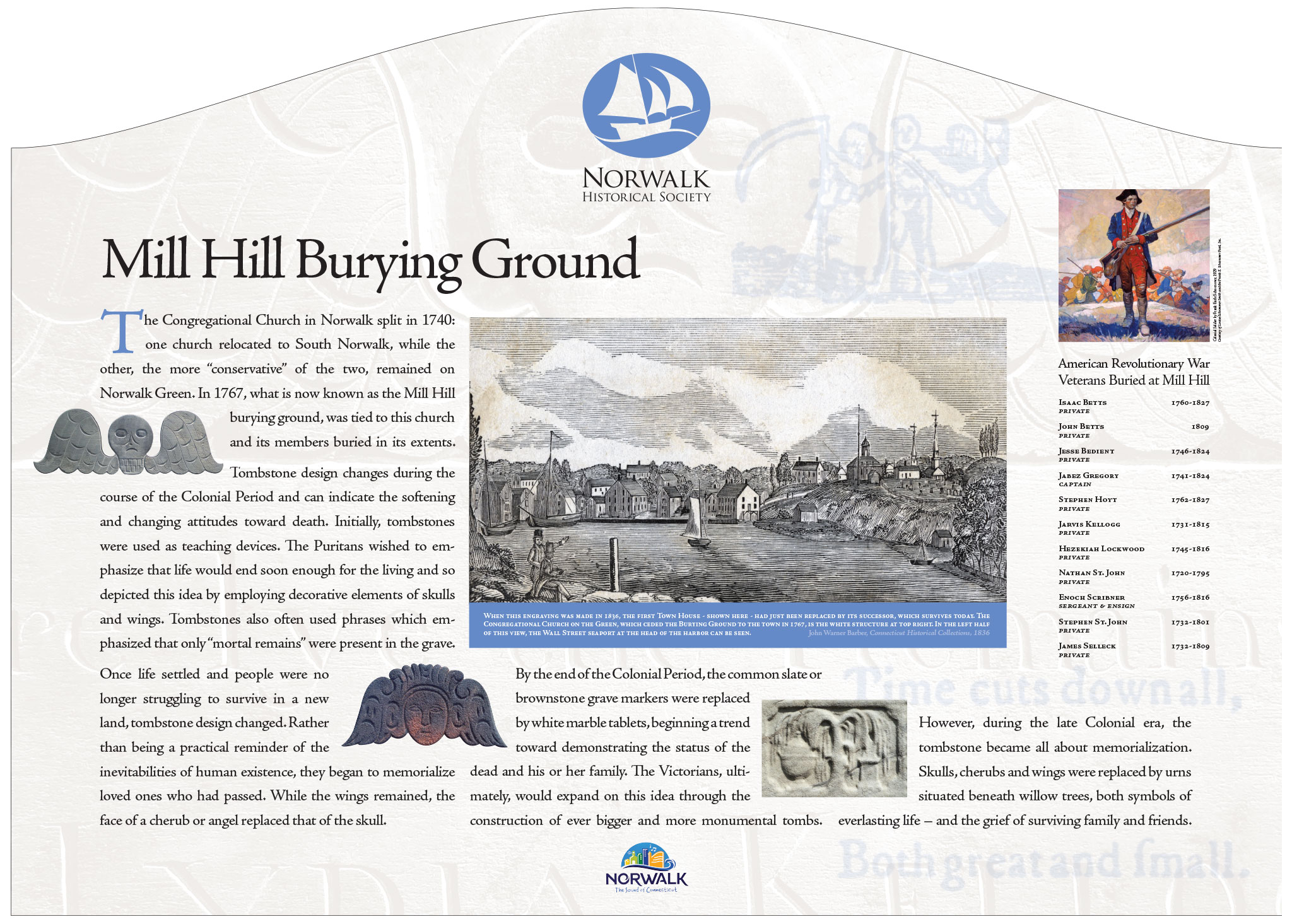
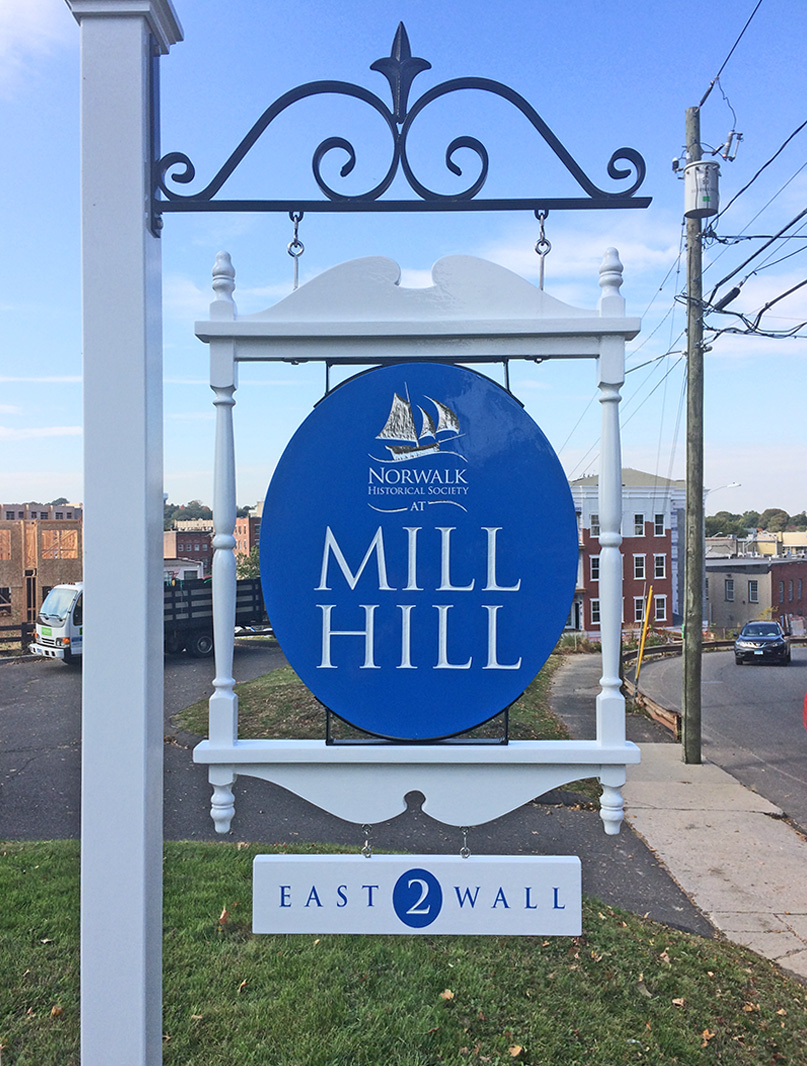
Mill Hill Historic Park, located in the heart of Norwalk, Connecticut, is a central landmark chronicling the city’s evolution from its colonial roots to the modern era. Established as a burying ground in 1767, the site quickly became a civic hub as its location eventually served as the seat of local government.
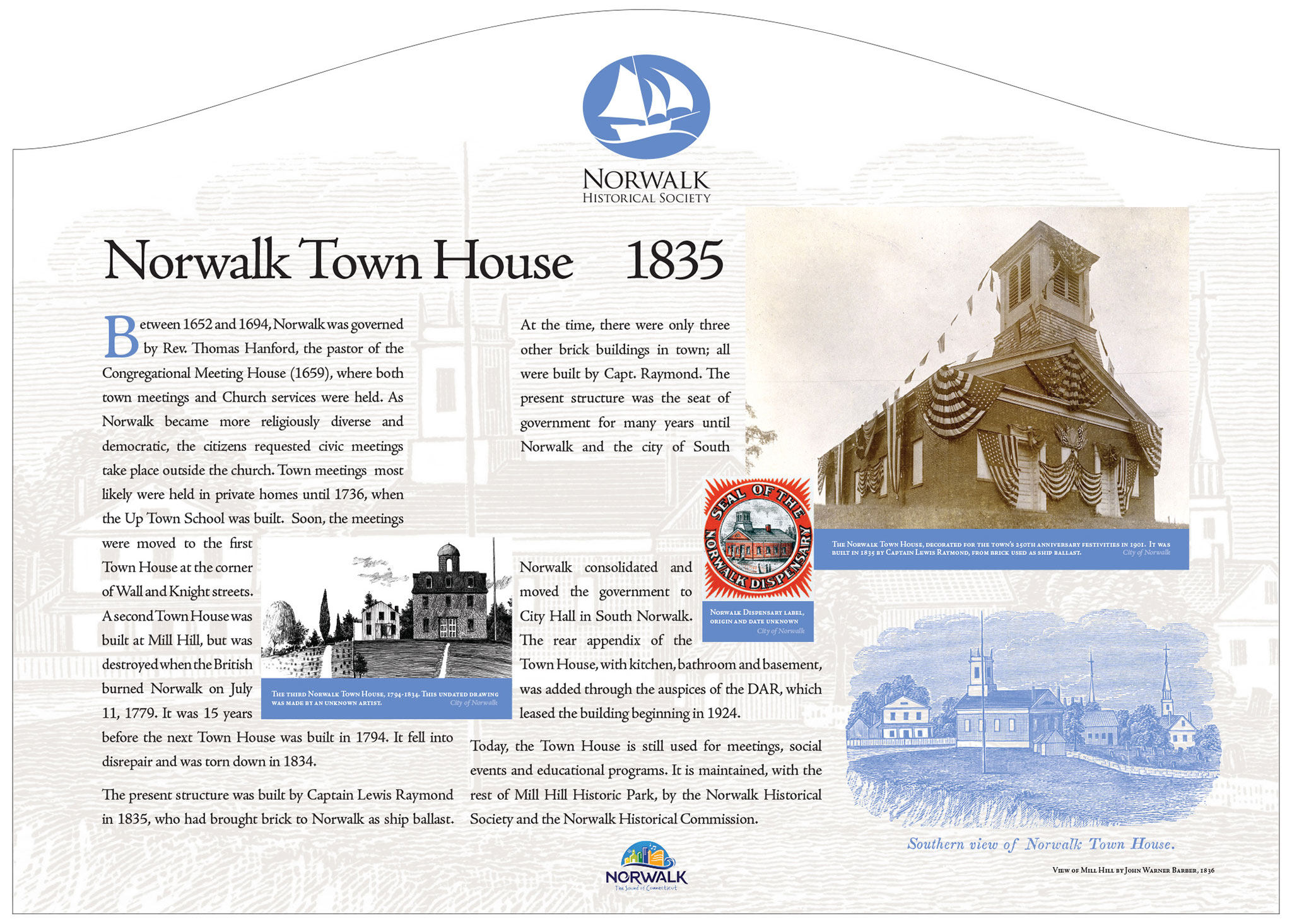
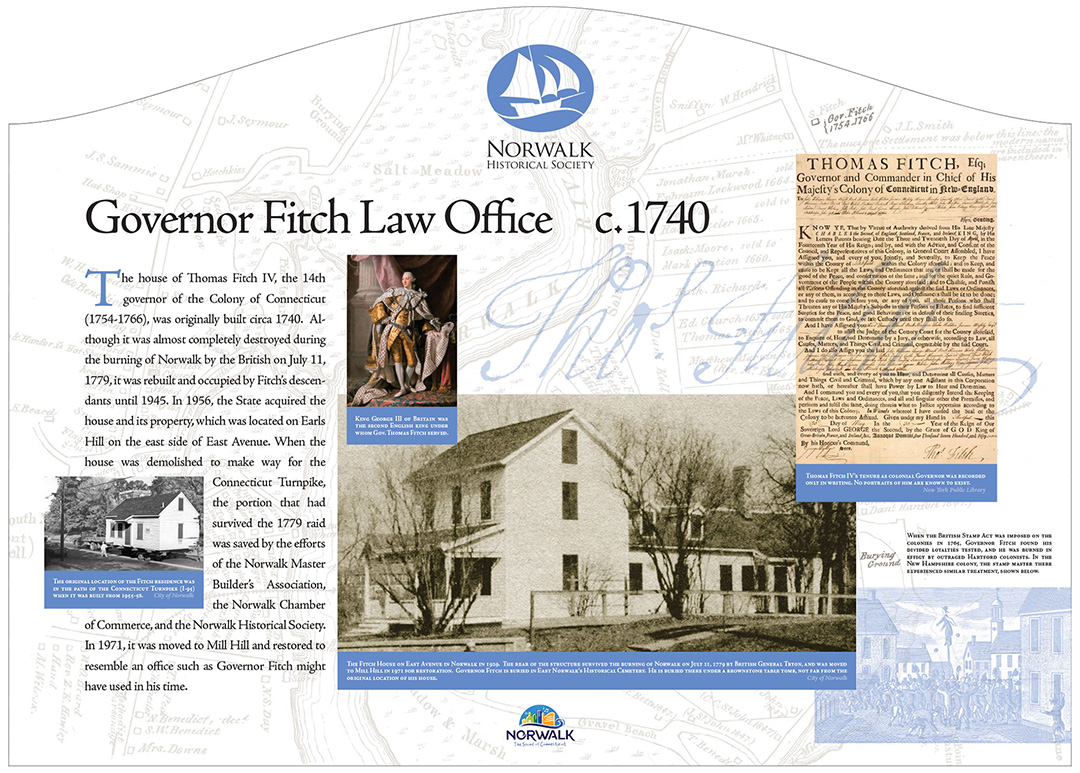
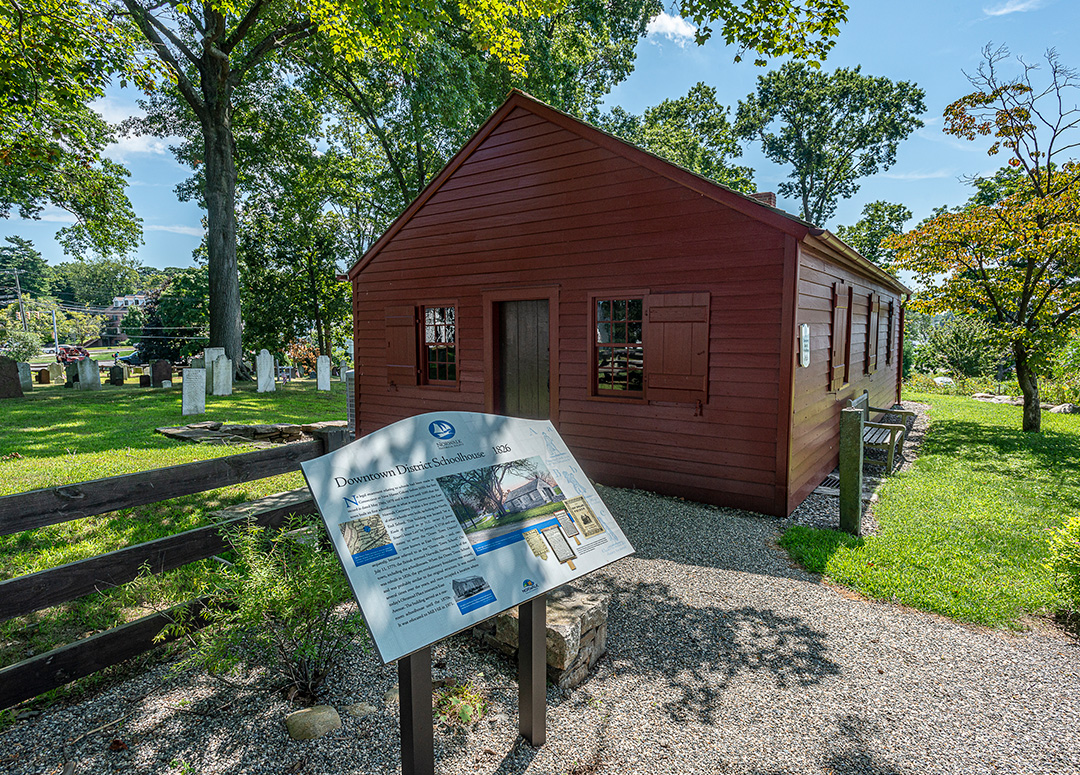
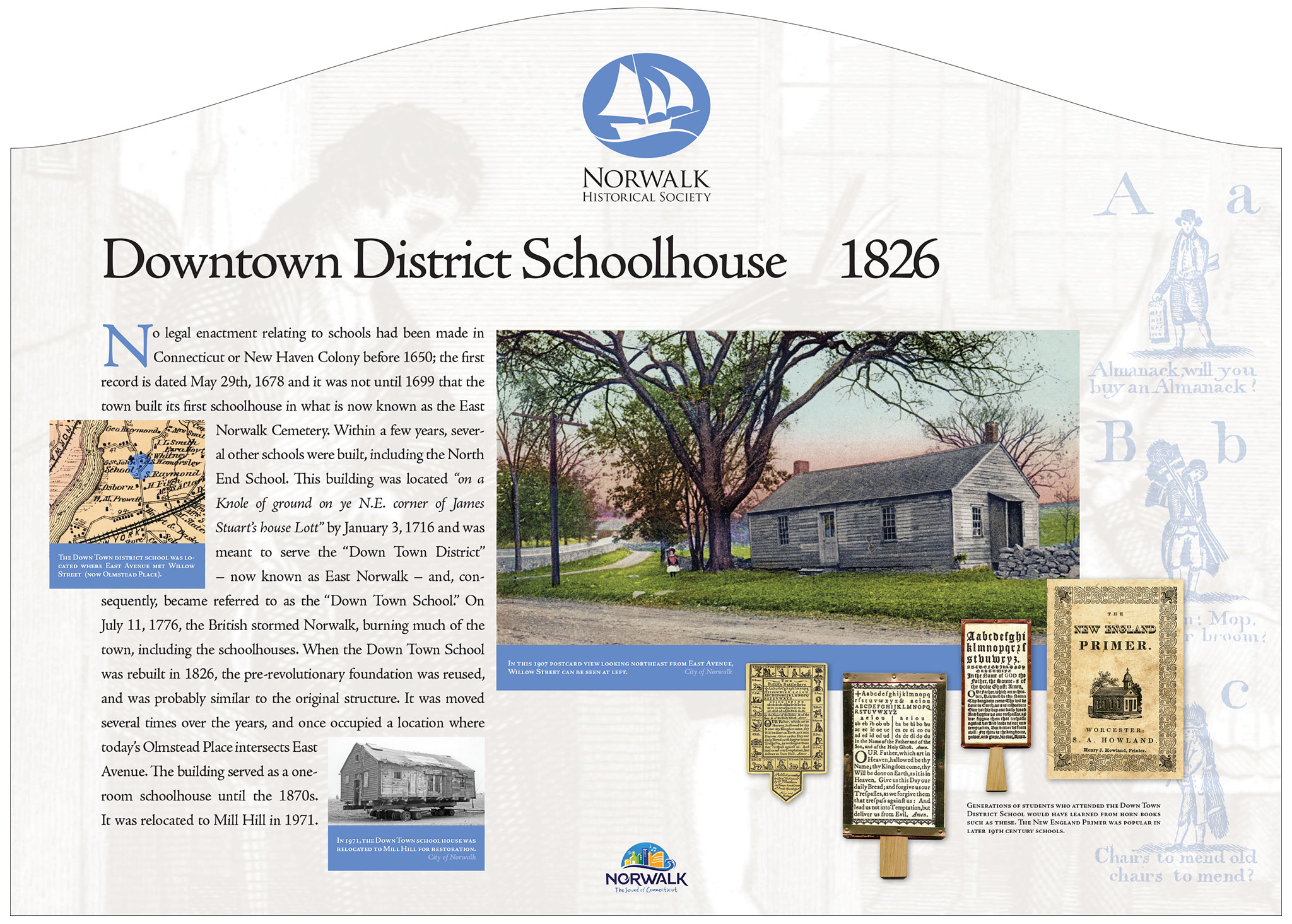
Today, Mill Hill is home to a collection of three historic buildings—the Town House, the c. 1740 Governor Fitch Law Office, and the 1826 Downtown District Schoolhouse—each relocated to the site in the mid-20th century to preserve and celebrate Norwalk’s diverse past.
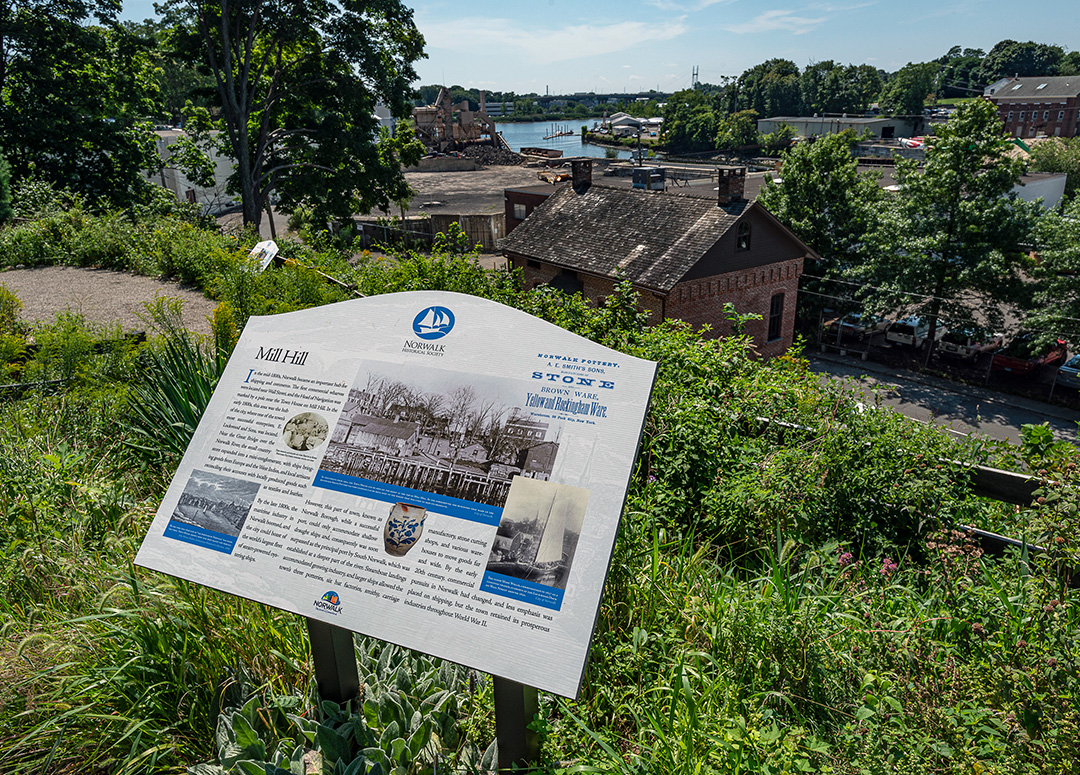
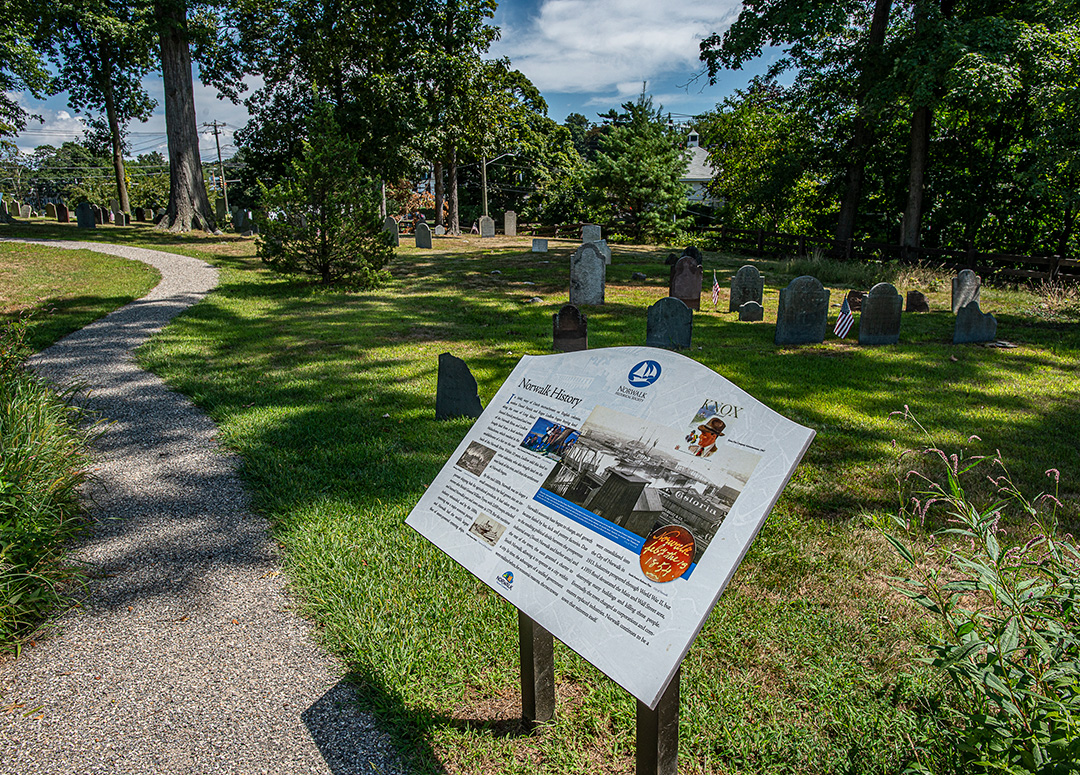
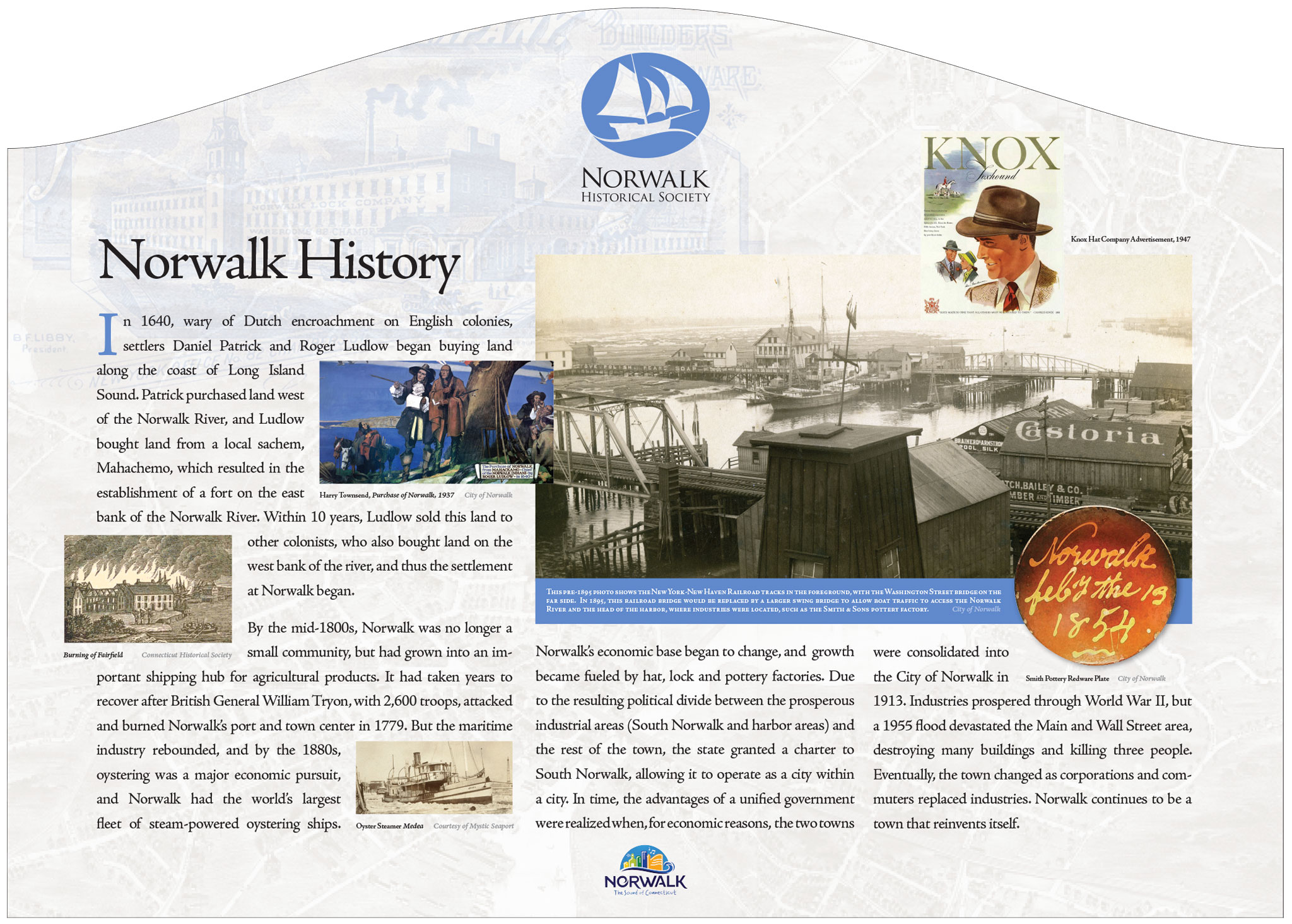
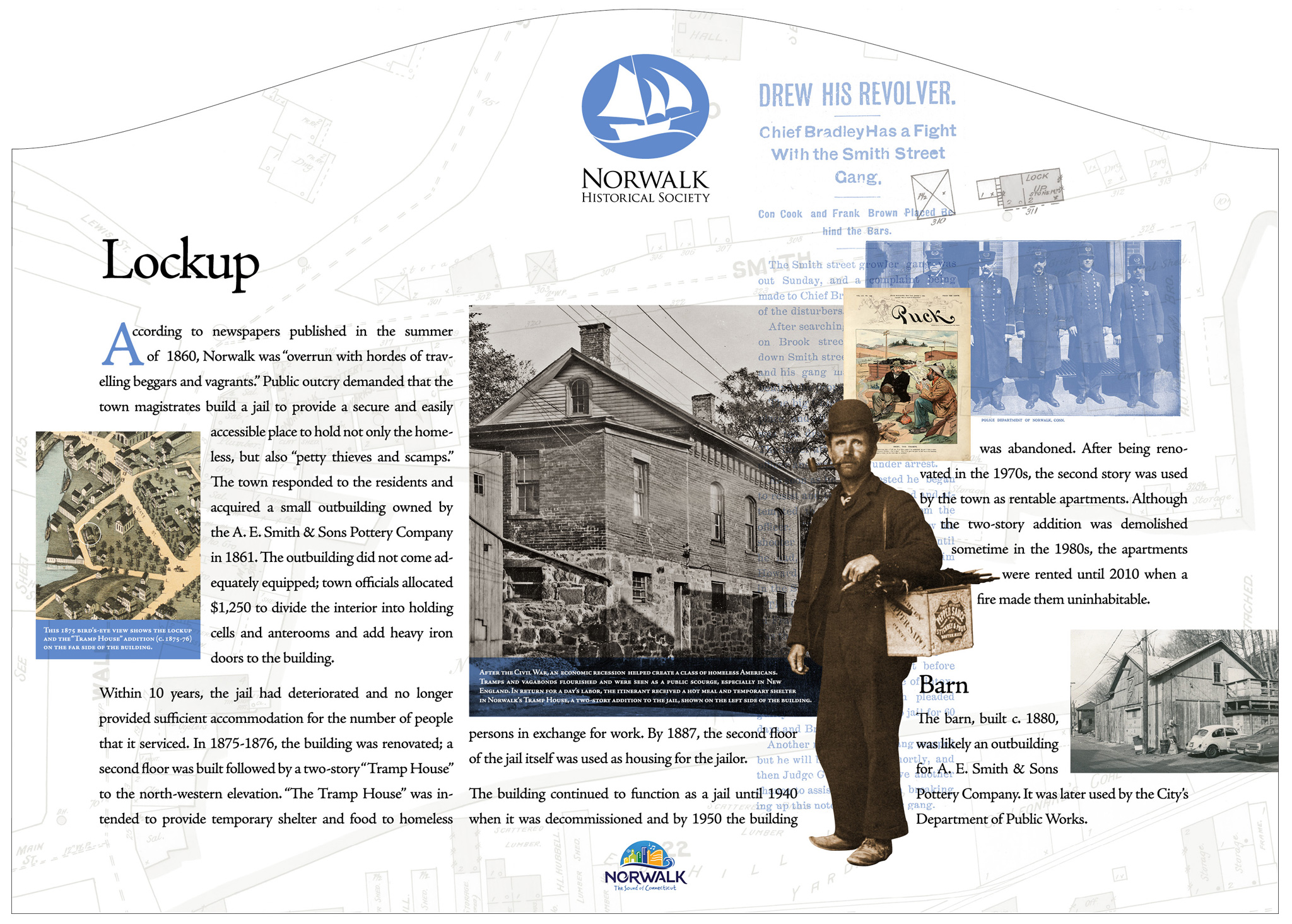
To support the site’s mission of public education and historic preservation, Oxygen Design collaborated with Daryn Reyman-Lock, PhD of Sawdust and Strata Consulting to develop a comprehensive set of interpretive exhibit panels. These panels were carefully researched and designed to offer engaging, accessible narratives that guide visitors through more than 250 years of Norwalk history.
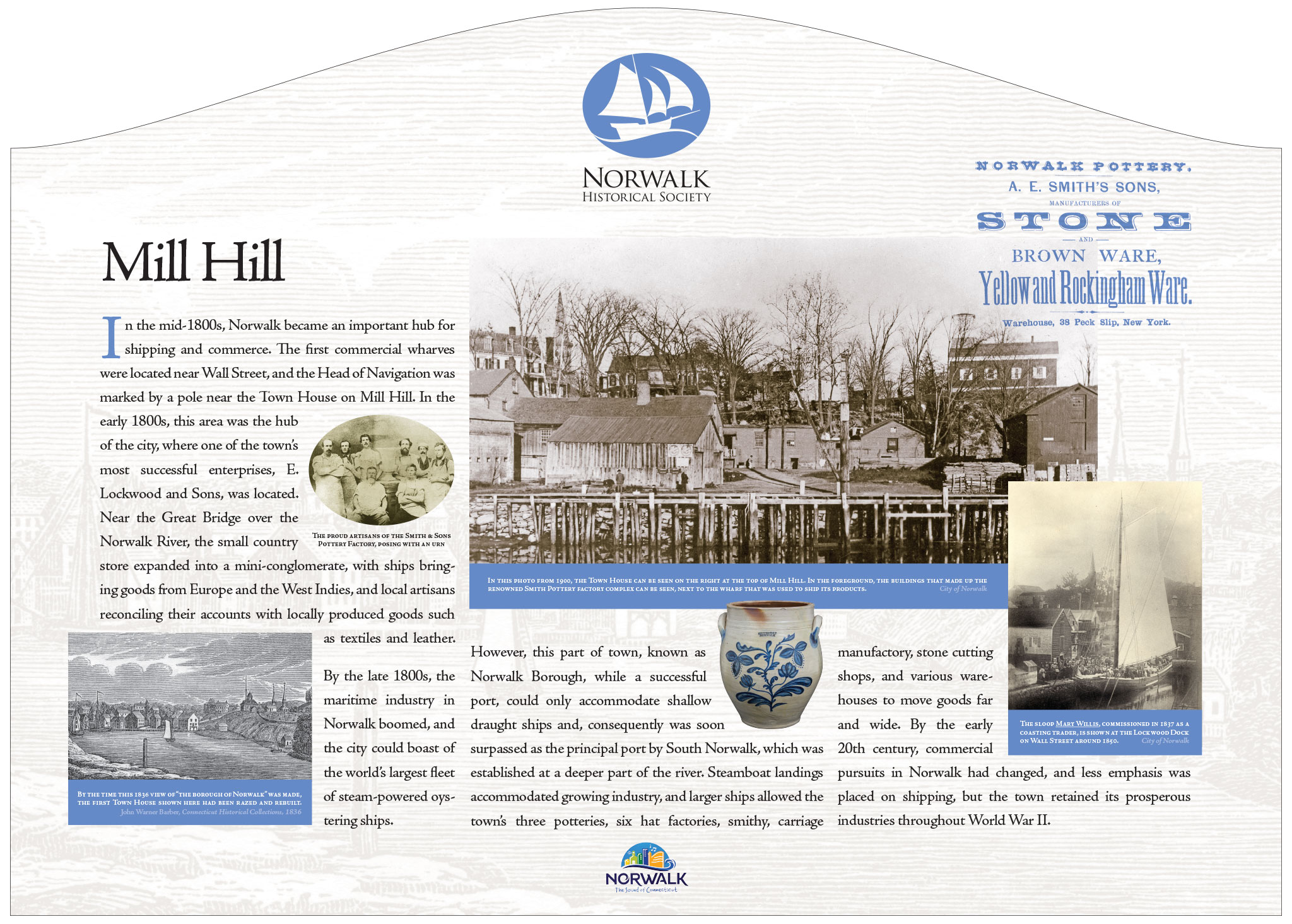
The signage covers a range of topics, including colonial governance, educational practices in rural New England, the role of Connecticut’s legal system during the 18th century, and the evolution of town life through the 19th and 20th centuries. Each panel is visually cohesive with the site’s historic character, combining compelling graphics, period illustrations, and clearly written historical summaries to enrich the visitor experience.
By bringing clarity and context to this multi-structure heritage site, Oxygen Design’s work helps visitors—whether students, tourists, or lifelong Norwalk residents—connect more deeply with the city’s heritage. The interpretive panels encourage curiosity and engagement, providing an immersive introduction to the people, events, and institutions that helped shape Norwalk’s place in Connecticut’s story.